KaelSite
Construction Project Types: Work Items, Inspections and Compliance
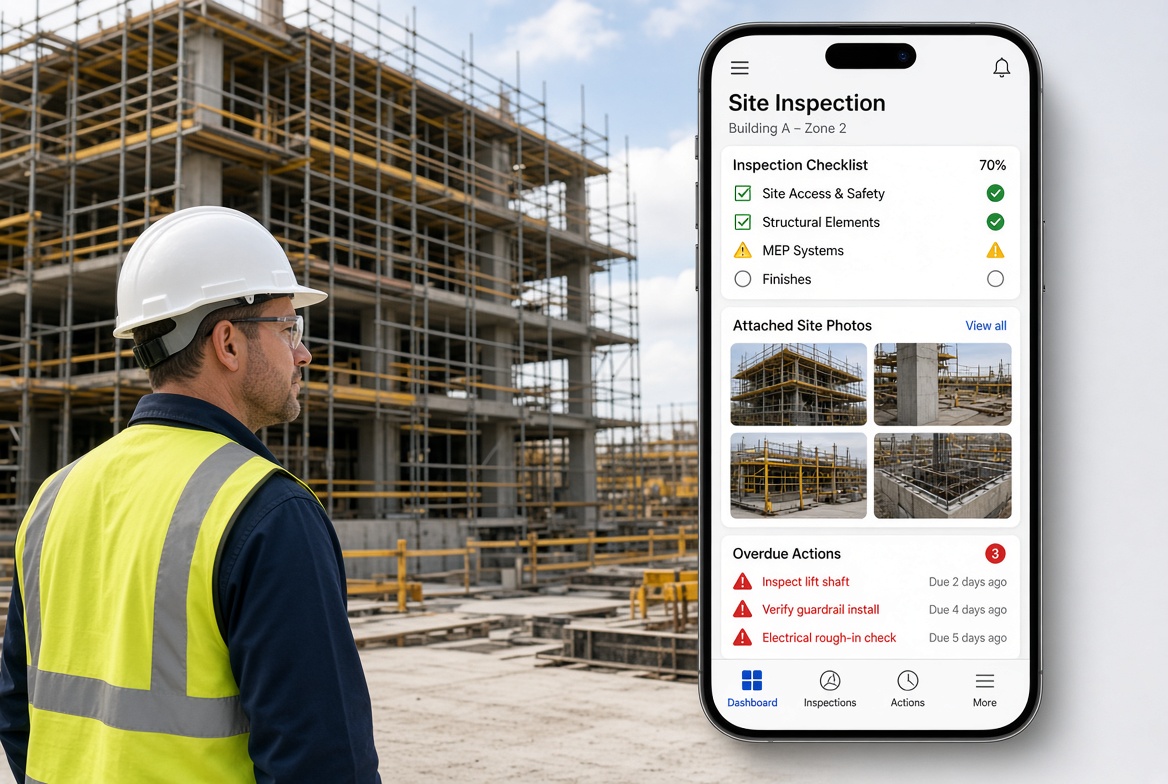
KaelSite’s construction catalog covers 20 project types, 596 work items, 2,345 inspection links and 310 shared inspection types, helping UK construction teams …
Read article KaelSite
kaelsite.com
Sub-base calculator
Work out how much MOT Type 1 or other aggregate you need from length, width and compacted depth. Edit the material density, add compaction and wastage allowances, and optionally estimate cost.
Read the guide: Aggregate and MOT Type 1 Calculator.
Free to use. No registration required.
From the blog
KaelSite
KaelSite’s construction catalog covers 20 project types, 596 work items, 2,345 inspection links and 310 shared inspection types, helping UK construction teams …
Read articleTemporary Work
Temporary works are hard to manage when registers, inspections, photos and actions are scattered across spreadsheets and emails. This guide explains what …
Read articleTemporary Work
BS 5975 is the British Standard code of practice for controlling temporary works. This guide explains the 2024 split into BS 5975-1 …
Read articleMultiply length × width × compacted depth (all in metres) to get the compacted volume in m³. Multiply by the bulk density (about 2.0–2.2 t/m³ for Type 1) to get tonnes. Add compaction and wastage allowances before you place the order so you do not run short on site.
Many private driveways use around 100–200 mm of compacted MOT Type 1 under the wearing course, but the correct depth depends on ground conditions and the finished surface. This calculator suggests 150 mm for driveways as a starting point — always follow the design or supplier guidance.
A common guide figure for compacted Type 1 is about 2.1 tonnes per cubic metre. Quarries quote different bulk densities for loose and compacted material, so edit the density field to match your delivery ticket or specification.
Compaction allowance covers the extra loose material needed to achieve the finished compacted depth after rolling. Wastage covers spill, overbreak and site handling losses. Both increase the order volume; they are applied one after the other in this calculator.
Tonnes = order volume (m³) × bulk density (t/m³). For example, 10 m³ of Type 1 at 2.1 t/m³ is 21 tonnes. Aggregates are usually sold by the tonne, so weight is what most merchants need.
Yes. Choose the material from the list or pick custom and enter the density yourself. The volume maths is the same for any unbound aggregate sub-base or fill laid to a compacted thickness.
KaelSite