Civil Engineering & Infrastructure: Construction Work Items, Site Inspections and Compliance
Civil engineering and infrastructure projects create and maintain the systems that communities and businesses rely on, including roads, drainage networks, bridges, retaining structures, utility corridors and other essential infrastructure.
These projects often involve multiple contractors, specialist activities, changing ground conditions and work spread across large or linear sites. Maintaining clear inspection records is important for tracking construction quality, documenting defects and coordinating activities between teams.
For UK construction teams, a structured digital inspection and reporting process can help keep site information organised throughout delivery. KaelSite provides a dedicated Civil Engineering / Infrastructure project type to support project-specific work items and inspection workflows. Explore the full construction project types guide.
Civil engineering and infrastructure: KaelSite catalogue overview
KaelSite’s Civil Engineering / Infrastructure project type includes:
-
39 work items
-
170 inspection links
These figures describe the KaelSite catalogue for this project type. Inspection links represent associations between work items and inspections, rather than a count of unique inspection types or a prescribed checklist for every infrastructure project.
The relevant activities and checks will depend on the project design, contract requirements, construction methods, ground conditions and applicable technical standards.
1. What does civil engineering and infrastructure construction involve?
Civil engineering covers a broad range of construction activities involving land, structures, transportation systems, drainage and essential services.
Infrastructure projects may include new construction, upgrades, extensions, repairs and improvements to existing assets. They can take place on greenfield sites, within existing transport corridors, in urban environments or alongside operational infrastructure.
Depending on the project, construction activities may involve:
-
Site establishment, setting out and access arrangements.
-
Earthworks, excavation and formation preparation.
-
Ground improvement and foundation construction.
-
Reinforced concrete and structural works.
-
Retaining walls, culverts and other engineered structures.
-
Roads, pavements and associated infrastructure.
-
Drainage, water management and utility installations.
-
Embankments, slopes and erosion protection.
-
Installation of ducts, chambers and service corridors.
-
Testing, commissioning, reinstatement and handover.
These are illustrative examples of civil engineering activities, not a representation that every item is included in KaelSite’s catalogue.
Each project should establish its inspection and testing requirements from the approved design, specification, method statements and relevant contractual obligations.
2. Site preparation, setting out and ground conditions
Early construction activities establish the conditions in which subsequent work will take place. Errors in setting out, inadequate site preparation or unexpected ground conditions can affect safety, programme and construction quality.
Inspection and reporting workflows may be used to document relevant observations during site preparation and the establishment of work areas.
Depending on the project, teams may need to consider:
-
Survey information and setting-out references.
-
Existing ground levels and required formation levels.
-
Access routes and working areas for plant.
-
Existing structures and adjacent assets.
-
Ground conditions that differ from the design assumptions.
-
Surface water, groundwater and drainage arrangements.
-
Environmental constraints and protected areas.
-
The location of existing underground services.
Where unexpected ground conditions arise, the team should record the observation and refer it to the appropriate engineer or designer. Construction should not proceed on the assumption that an unverified condition is acceptable.
Records should identify the affected location and provide enough information for the relevant person to assess the issue and determine the next action.
3. Earthworks, excavation and formation
Earthworks can involve substantial quantities of soil and other materials, extensive plant movements and changing ground conditions. The work may include cuttings, embankments, excavation, filling, grading and preparation of formation levels.
Quality requirements vary according to the intended use of the ground and the engineering specification.
Potential inspection considerations include:
-
Excavation dimensions and formation levels.
-
Ground conditions exposed during excavation.
-
Suitability and placement of fill materials.
-
Layer thickness and compaction requirements.
-
Testing records for earthworks where specified.
-
Surface water management and erosion.
-
Stability of excavations, slopes and embankments.
-
Protection of completed formation before subsequent work.
Where compaction, material properties or bearing conditions require testing, visual inspection alone may not be sufficient. Results should be recorded against the relevant specification and location.
Excavations and earthworks also introduce significant safety risks. Suitable protective measures, safe access, plant management and controls for ground instability should be established by competent personnel.
The inspection process should support the approved construction methodology rather than encourage work to continue where the conditions differ materially from those anticipated.
4. Foundations, concrete and structural construction
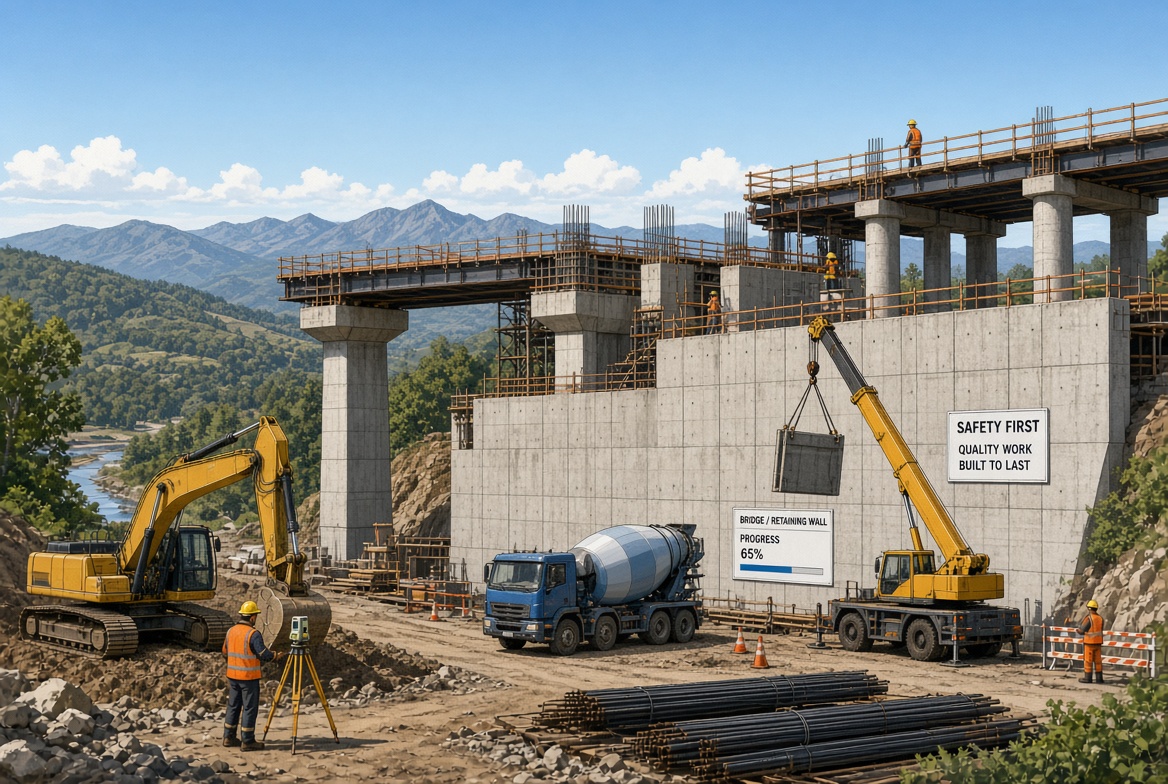
Many infrastructure projects include structural elements such as reinforced concrete bases, retaining walls, culverts, abutments, support structures and other engineered components.
Construction quality depends on achieving the specified dimensions, materials, reinforcement arrangements and installation sequence.
Depending on the design and work package, inspection and testing may cover:
-
Foundation dimensions and founding conditions.
-
Formwork condition, dimensions and stability.
-
Reinforcement size, spacing, positioning and cover.
-
Cast-in components, fixings and embedded items.
-
Concrete delivery and placement records.
-
Specified concrete testing and curing arrangements.
-
Construction joints and interfaces.
-
Structural tolerances and completed surface condition.
The project specification should define the applicable inspection points and acceptance criteria. Where inspection is required before concrete placement or another activity conceals the work, the relevant hold point should be respected.
Photographs can provide useful evidence of reinforcement, formwork and embedded components before they become inaccessible. However, photographs do not replace required inspections, material test results or formal approvals.
Any departure from the approved design should be referred through the project’s technical review and change-control process.
5. Roads, pavements and transport infrastructure
Transport infrastructure projects can involve new roads, access routes, junctions, pavement construction, footways and improvements to existing highway assets.
These projects often require coordination between earthworks, drainage, utilities, pavement layers, traffic management and finishing activities.
Illustrative inspection considerations may include:
-
Formation and sub-base preparation.
-
Material delivery and compliance with the specification.
-
Layer thickness, levels and crossfall.
-
Compaction and specified material testing.
-
Kerbs, edging and drainage interfaces.
-
Asphalt or other pavement installation.
-
Surface condition and finished levels.
-
Road markings, signs and associated features where included in scope.
-
Temporary traffic management and safe work-zone arrangements.
For highway works, the applicable specification may be set by the highway authority, asset owner, contract and project design. Requirements can differ between public roads, private infrastructure and other paved areas.
Inspection records should identify the relevant chainage, location or section of work where appropriate. This makes it easier to connect findings to drawings, test results and subsequent remedial work.
Where the project takes place on an operational road or beside live traffic, site inspections should also consider the effectiveness of the approved traffic management arrangements and the separation of workers from moving vehicles.
6. Drainage, water management and underground utilities
Civil engineering projects frequently include drainage and utility infrastructure, even where these are only one part of a much larger construction programme.
These activities need careful coordination because buried work becomes difficult to inspect after backfilling and reinstatement.
Depending on the design and specification, relevant activities may include:
-
Installation of drainage pipes and associated fittings.
-
Formation and bedding preparation.
-
Inspection of pipe alignment, levels and gradients.
-
Construction of chambers and access points.
-
Connections to existing drainage systems.
-
Installation of utility ducts and service corridors.
-
Required leakage, pressure or other specified tests.
-
Backfilling, compaction and reinstatement.
-
Recording the position of completed buried assets.
Testing requirements depend on the system and its intended use. The project team should establish which tests, inspections and records are required before work is concealed.
Existing underground services present a separate safety concern. Their locations should be established using suitable information, detection methods and safe excavation procedures. Plans alone should not be treated as definitive proof of a service’s exact position.
For further information, consult the HSE’s guidance on avoiding danger from underground services.
7. Temporary works, plant and site safety
Infrastructure projects can require temporary arrangements to support permanent construction or maintain safe working conditions. Examples may include excavation support, temporary access, working platforms, formwork and other engineered temporary structures.
The appropriate arrangements depend on the work, the risks and the temporary works design. Where temporary works procedures apply, responsibilities and inspection requirements should be established before construction begins.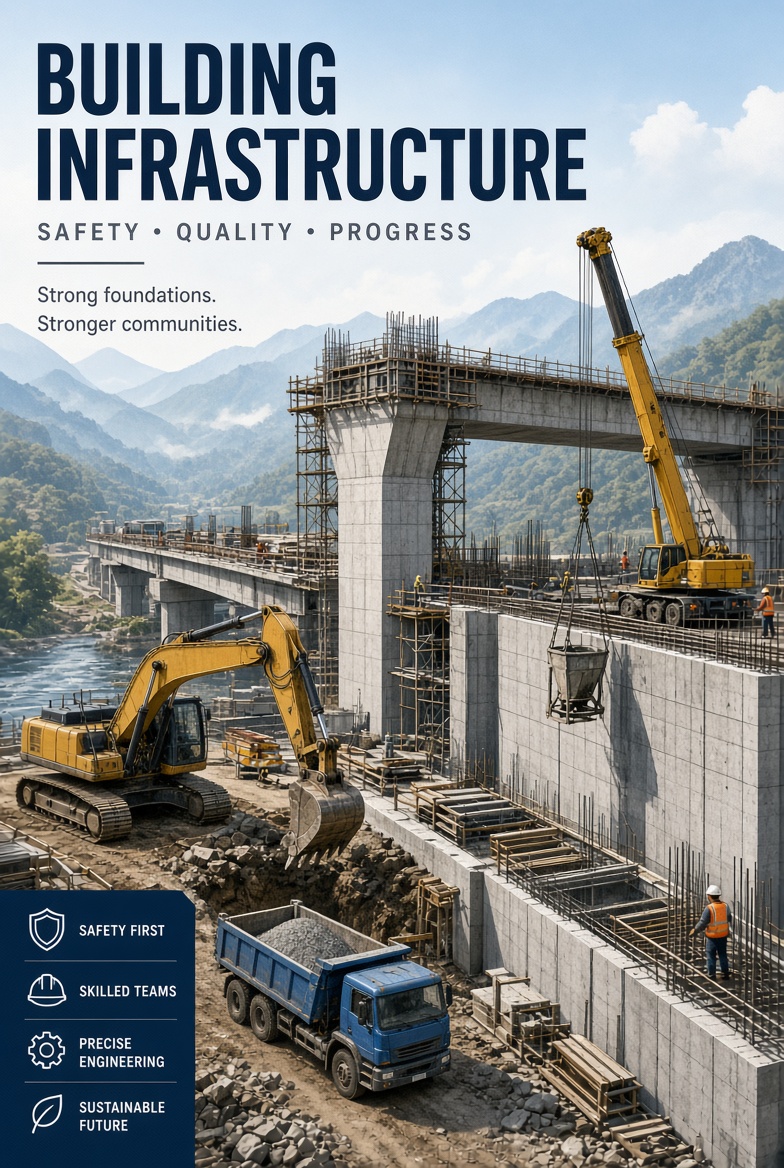
Site safety considerations may include:
-
Excavation support and ground stability.
-
Safe access and egress.
-
Plant routes, reversing and lifting activities.
-
Segregation of pedestrians and machinery.
-
Stability of temporary structures and working platforms.
-
Work near water, traffic or existing infrastructure.
-
Weather-related effects on ground and working conditions.
-
Changes to the work sequence or site layout.
Inspection records can help document observed conditions and outstanding actions, but they should not replace required engineering checks, formal permits or specialist inspections.
If a temporary arrangement appears damaged, unstable or inconsistent with its approved design, the issue should be escalated and the appropriate controls implemented before affected work continues.
8. Environmental controls and neighbouring assets
Infrastructure projects can extend across large areas and may affect nearby communities, watercourses, habitats, roads and existing structures.
Environmental controls and asset protection measures should be identified during planning and incorporated into the construction process.
Depending on the location and scope, project teams may need to monitor:
-
Surface water runoff and sediment control.
-
Dust, noise and vibration.
-
Waste segregation and material storage.
-
Protection of watercourses and drainage systems.
-
Erosion and slope stability.
-
Effects on neighbouring buildings or infrastructure.
-
Access arrangements and disruption to the public.
-
Requirements imposed by permits, consents or asset owners.
Monitoring requirements should be based on the relevant assessment, consent conditions and project specification. Where monitoring results exceed an established threshold, the team should follow the agreed escalation and response process.
A clear record of the observation, location, relevant measurement and corrective action helps establish what happened and how it was addressed.
9. Managing inspection records across large infrastructure sites
Infrastructure work may be delivered across multiple work fronts, subcontractors and geographical locations. Inspection records need to remain understandable even when different teams are working on separate parts of the same project.
Paper forms, spreadsheets and disconnected photographs can make it harder to trace findings back to the correct location or determine which actions remain outstanding.
A structured digital inspection workflow can help teams organise:
-
Work items and associated inspections.
-
Site observations and defect descriptions.
-
Photographs and supporting evidence.
-
Locations, chainages or other project references.
-
Corrective actions and follow-up requirements.
-
Inspection and reporting status.
-
Test records and relevant supporting documentation.
-
Outstanding issues requiring review or approval.
Consistent naming and location references are particularly useful on linear infrastructure projects, where two defects may appear similar but relate to entirely different sections of the asset.
Teams should also distinguish between observations, completed activities and verified outcomes. An item being marked complete does not necessarily mean that all specified testing, technical review or formal acceptance has taken place.
The project’s inspection and test plan should establish the evidence needed at each stage and identify the people responsible for reviewing it.
10. UK compliance considerations for civil engineering projects
Civil engineering and infrastructure projects can involve several legal, technical and contractual requirements. The applicable obligations depend on the project type, location, activities and parties involved.
Construction (Design and Management) Regulations 2015
CDM 2015 sets out duties for clients, designers, principal designers, contractors and principal contractors, as applicable to the project. These duties address the management of health, safety and welfare throughout construction.
Infrastructure work may involve excavation, lifting operations, temporary works, traffic interfaces and other significant hazards. Risks should be considered during design and planning, with suitable controls implemented throughout delivery.
See the HSE’s construction design and management guidance.
Health and safety during construction
Construction teams must identify and manage risks associated with their activities. Depending on the work, relevant considerations can include excavations, underground services, plant movement, work near traffic, lifting operations and temporary works.
Site procedures and inspection records should reflect the actual hazards and agreed control measures. A digital checklist is not a substitute for suitable risk assessment, competent supervision or safe working methods.
Environmental permissions and asset-owner requirements
Drainage, watercourse works, highways, utilities and other infrastructure activities may require permissions, consents, permits or approval from relevant authorities and asset owners.
The project team should establish the requirements that apply to the specific site and scope. They should not assume that a general construction inspection process covers all environmental or asset-owner obligations.
Specifications, testing and handover
Infrastructure contracts often specify inspection points, material testing, tolerances, survey information and handover documentation.
The approved design, contract specification and applicable standards should determine what needs to be inspected, tested and recorded. Project teams should maintain the evidence needed to demonstrate that work has been completed and reviewed in accordance with those requirements.
Important: Digital inspection records can support project management and compliance evidence, but they do not by themselves establish legal compliance or replace required engineering assessments, tests, approvals or certifications.
11. How KaelSite supports civil engineering and infrastructure workflows
Civil engineering teams need to manage site findings, inspection activities and reporting across different work packages and construction stages.
KaelSite’s Civil Engineering / Infrastructure project type provides a catalogue structure of work items and associated inspection links that teams can use to organise their digital inspection workflows.
Depending on the project and its configured workflow, KaelSite can help teams:
-
Organise inspections around relevant work items.
-
Record site observations and defects digitally.
-
Capture photographs and supporting information.
-
Maintain clearer inspection and reporting records.
-
Track findings through the relevant workflow.
-
Support consistent documentation across site activities.
KaelSite is designed as a mobile-first compliance app for UK construction teams, with offline-first functionality to support work on sites where connectivity is limited.
Core inspection and reporting workflows are available on mobile and web. Advanced features, including full Report Editing and AI Report Drafting, are available on the web.
The app supports the organisation of project information. Engineering decisions, technical acceptance, specialist testing and formal approvals remain the responsibility of the appropriately qualified or authorised people.
12. Improving quality control from construction through handover
Reliable infrastructure delivery depends on more than completing individual activities. Teams need to maintain traceable records of what was constructed, which inspections and tests were undertaken, what defects were identified and how outstanding issues were resolved.
A consistent inspection process can help connect site observations to relevant work items, test evidence and corrective actions. This is particularly valuable where work becomes concealed, several contractors share responsibility or the project extends across multiple locations.
The most effective workflow is one aligned with the approved design, inspection and test plan, contract requirements and actual site conditions.
Explore the KaelSite construction project types catalogue to see how work items and inspection links are organised across different types of UK construction projects.
Frequently asked questions
What is civil engineering and infrastructure construction?
It covers the construction, improvement and maintenance of engineered assets such as roads, drainage systems, retaining structures, bridges, utility corridors and other infrastructure. The exact scope varies by project.
What inspections are needed for civil engineering projects?
The required inspections depend on the design, specification, construction methods and risks. They may involve earthworks, foundations, concrete, drainage, utilities, pavements, temporary works and environmental controls. Project-specific inspection and test plans should define the applicable requirements.
Why are inspection records important in infrastructure projects?
Records help teams document construction quality, identify defects, connect observations to locations and work packages, and retain evidence of testing and corrective actions. Clear records also support reviews and handover.
Can civil engineering inspections be managed digitally?
Digital workflows can help teams record findings, attach photographs, organise inspection information and track reporting tasks. They can be particularly useful on large sites or projects involving several work fronts, although they do not replace specialist inspections or required testing.
How does KaelSite support infrastructure projects?
KaelSite provides a Civil Engineering / Infrastructure project type with 39 work items and 170 inspection links in its catalogue. The app supports digital inspection and reporting workflows for UK construction teams, including offline-first use where connectivity is limited.
Organise civil engineering inspections with KaelSite
Civil engineering and infrastructure projects require coordinated work, reliable quality records and clear communication between site teams. KaelSite helps construction teams organise digital inspections and reporting workflows across infrastructure and other construction project types.
Explore the KaelSite construction project types catalogue to learn more about the available work item and inspection structure.

Comments (0)
Add a Comment
No comments yet. Be the first to comment!