Roads & Highways: Construction Work Items, Site Inspections and Compliance
Road construction and highway improvement projects involve multiple activities that must be coordinated to deliver safe, durable and compliant infrastructure. From earthworks and pavement construction to drainage, kerbs, road markings and reinstatement, each stage can require specific quality checks and supporting records.
For UK contractors, site managers and quality teams, maintaining consistent road construction inspection records helps identify defects, coordinate corrective work and demonstrate that activities have been checked against the relevant project requirements.
KaelSite’s Roads / Highways project type provides a structured catalogue of work items and associated inspection links to help construction teams organise digital inspections and reporting workflows across highway and roadworks projects.
Roads and highways: KaelSite catalogue overview
The KaelSite Roads / Highways project type includes:
-
30 work items
-
123 inspection links
These figures relate specifically to the KaelSite catalogue. Inspection links represent associations between work items and inspections; they are not a count of unique inspection types or a universal list of mandatory highway checks.
The checks required on an individual project depend on the road classification, design, contract specification, highway authority requirements, construction methods and applicable standards.
1. What does road and highway construction involve?
Road construction and highway works cover the creation, improvement, maintenance and reinstatement of roads and associated infrastructure.
Projects may involve new access roads, residential streets, commercial developments, highway upgrades, resurfacing, junction improvements and work within existing public highways.
Depending on the project, activities may include:
-
Site preparation and road formation.
-
Earthworks, cuttings and embankments.
-
Sub-base and pavement layer construction.
-
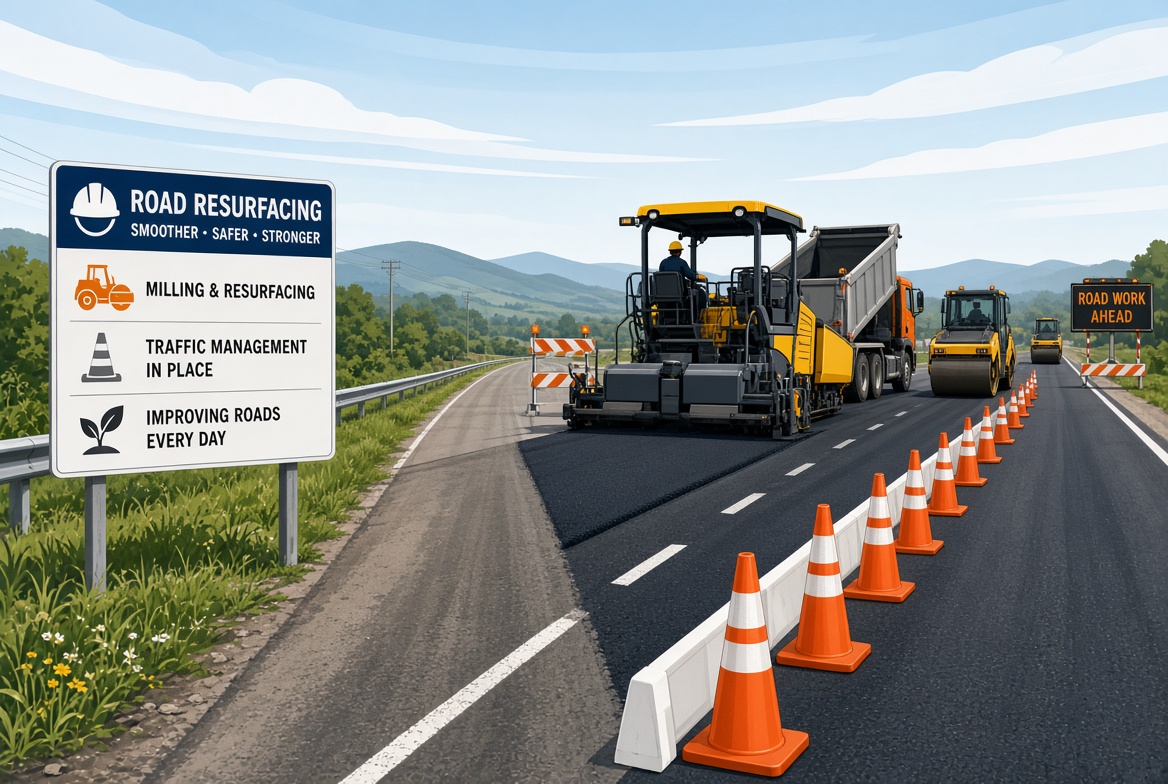
Asphalt surfacing and other specified road finishes.
-
Kerbs, footways and pedestrian areas.
-
Highway drainage and associated chambers.
-
Road markings, signs and street furniture.
-
Traffic management and temporary road closures.
-
Utility works and highway reinstatement.
-
Defect correction, testing and handover.
These are illustrative examples of road and highway activities, not a claim that every item is included in the KaelSite catalogue.
A project-specific inspection and test plan should define the relevant inspection stages, acceptance criteria, testing requirements and evidence needed before work proceeds to the next stage.
2. Road formation and earthworks inspections
The ground beneath a road affects its stability, load-bearing performance and long-term durability. Inadequate preparation, unsuitable materials or insufficient compaction can contribute to settlement, deformation and premature pavement failure.
Road formation and earthworks inspections help teams check that the prepared ground is suitable for the next construction stage.
Depending on the specification, relevant checks may include:
-
Formation levels, alignment and crossfall.
-
Ground conditions and unexpected soft spots.
-
Suitability of excavated and imported materials.
-
Fill placement and specified layer thicknesses.
-
Compaction testing and supporting results.
-
Drainage and management of surface water.
-
Stability of cuttings and embankments.
-
Protection of the prepared formation from weather and traffic.
The acceptance criteria should come from the approved design and project specification. Visual inspection alone may not establish whether a formation or earthworks layer meets the required engineering performance.
Where testing is specified, the results should be associated with the relevant location and layer. Any failed test or unsuitable ground condition should be recorded and referred for appropriate corrective action.
3. Sub-base, pavement layers and asphalt surfacing
Pavement construction generally involves several layers designed to distribute traffic loads and provide a durable running surface. The precise arrangement depends on the pavement design, expected traffic, ground conditions and project requirements.
Inspection requirements may apply at several stages, particularly where completed layers will be covered by subsequent work.
Sub-base and pavement preparation
Checks may cover material compliance, layer thickness, levels, compaction, surface condition and readiness for the next stage. The team should confirm that specified tests and required inspections have been completed before proceeding.
Asphalt and surface course installation
Asphalt surfacing requires appropriate materials, delivery and laying procedures, compaction and finishing. Depending on the specification, records may cover delivery information, laying conditions, surface levels, joints, compaction or density testing and finished surface condition.
Weather and site conditions may also affect whether surfacing can proceed in accordance with the approved method and product requirements.
Finished pavement quality
The completed road surface may need to meet specified tolerances for levels, crossfall, surface regularity, texture or other performance criteria. The relevant checks and test methods depend on the contract and applicable specification.
Photographs can help document visible defects such as segregation, damage, poor joints or surface irregularities. They should complement any required measurements and test results rather than replace them.
For construction teams, a consistent roadworks inspection workflow helps link each pavement stage to the relevant records, test evidence and outstanding actions.
4. Kerbs, footways and pedestrian infrastructure
Highway projects frequently include kerbs, footways, pedestrian crossings, paved areas and other features that connect the carriageway to surrounding infrastructure.
These elements need to meet the design requirements and coordinate with drainage, access points, boundaries and adjacent surfaces.
Depending on the scope, inspection considerations may include:
-
Kerb alignment, levels and line.
-
Bedding, haunching and specified support.
-
Footway formation and pavement layers.
-
Finished surface levels and transitions.
-
Access points and interfaces with existing surfaces.
-
Tactile paving and crossing arrangements where specified.
-
Surface condition and trip hazards.
-
Protection of completed work during subsequent construction.
Accessibility requirements should be considered in accordance with the applicable design and project requirements. Teams should not assume that visual appearance alone confirms that a crossing, footway or transition meets the required dimensions or performance criteria.
Where a defect affects access, drainage or safe use, it should be documented and assigned for corrective action before the relevant area is accepted.
5. Highway drainage and surface water management
Road drainage helps manage surface water and reduce problems associated with standing water, erosion and damage to pavement structures.
Highway drainage may include gullies, channels, pipes, chambers, carrier drains and connections to existing drainage networks. The installation and testing requirements depend on the drainage design and the relevant authority or asset owner.
Inspection and reporting activities may cover:
-
Drainage route and installation levels.
-
Pipe bedding, joints and connections.
-
Gully and chamber positions.
-
Cover levels and finished surface interfaces.
-
Specified testing and inspection results.
-
Removal of debris and construction obstructions.
-
Connections to existing systems.
-
Backfilling and reinstatement.
-
Evidence that drainage defects have been addressed.
Drainage installation should be coordinated with pavement layers, kerbs, utilities and other buried infrastructure.
Where work will be concealed, required inspections and tests should be completed before backfilling or covering the installation. Clear location references and photographs can help connect the installation records to the completed highway section.
For broader drainage and excavation considerations, see KaelSite’s Groundworks & Drainage inspections article.
6. Road markings, signs and highway finishing
Road markings, signs and other highway features help communicate road layouts, priorities, restrictions and directions to road users.
Depending on the project, finishing works may include carriageway markings, signs, bollards, barriers, street furniture and associated infrastructure.
Relevant inspection considerations may include:
-
Correct positioning against approved layouts.
-
Specified materials and installation methods.
-
Visibility, condition and legibility.
-
Completion of required curing or setting periods.
-
Fixings, foundations and supports.
-
Coordination with other highway features.
-
Protection of completed work from damage.
-
Required inspections and handover records.
The precise requirements depend on the design, road classification, authority requirements and contract specification.
Where road markings or signs are installed incorrectly, the issue should be recorded against the relevant location and drawing reference so that corrective work can be planned and verified.
7. Traffic management and safe roadworks
Road construction often takes place close to moving traffic, pedestrians, cyclists, neighbouring properties and other contractors. Effective temporary traffic management is therefore an important part of planning and delivering highway works.
The arrangements may include traffic signs, cones, barriers, temporary signals, diversions, pedestrian routes and restricted work zones, depending on the road and work activity.
Site teams should establish suitable arrangements before work begins and review them as conditions change.
Inspection and reporting considerations may include:
-
Whether the installed layout matches the approved arrangement.
-
The condition and positioning of signs and barriers.
-
Separation between workers and moving vehicles.
-
Safe pedestrian and cyclist routes.
-
Access for emergency services where relevant.
-
Visibility and lighting in the work area.
-
Changes resulting from work progress or site conditions.
-
Defects and corrective actions relating to temporary arrangements.
Temporary traffic management should be designed and implemented by appropriately competent people in accordance with the applicable requirements. A generic checklist cannot determine the safe arrangement for every road or work zone.
If traffic conditions, visibility or the layout change materially, the arrangements should be reviewed and adjusted as necessary.
For highway projects, traffic management should be coordinated with the construction sequence so that safe access and protection are maintained as work moves between sections.
8. Utility works, road openings and reinstatement
Road and highway projects often involve existing underground services or new utility installations. Excavation within an existing carriageway or footway creates additional coordination requirements because the work can affect traffic, pavement integrity and buried infrastructure.
Utility works may include service installation, diversions, repairs, connections and reinstatement after excavation.
Depending on the project, relevant checks may cover:
-
Identification and protection of existing services.
-
Excavation dimensions and safe working conditions.
-
Installation and inspection of the new service.
-
Required pre-backfill inspections and testing.
-
Suitable backfill materials and compaction.
-
Reinstatement of pavement layers.
-
Finished levels and surface condition.
-
Required records for the highway authority or asset owner.
The applicable reinstatement specification and acceptance requirements should be confirmed for the particular road, authority and type of work.
Where an installation or repair is carried out by a utility contractor, the responsibilities for inspection, reinstatement and acceptance should be clear. Records should make it possible to trace the work to its location, contractor and relevant test or inspection evidence.
For further context, see KaelSite’s Utilities construction inspections article.
9. Road construction defects and corrective actions
Construction defects can arise at any stage of a highway project. Examples may include unsuitable formation, failed compaction tests, damaged kerbs, defective joints, drainage problems, incorrect levels or poor reinstatement.
The importance of a defect depends on its location, severity, technical implications and potential impact on safety or durability.
A useful road construction defect record should capture:
-
The road section, chainage or precise location.
-
The relevant work item or construction stage.
-
A clear description of the observed defect.
-
Photographs or other supporting evidence.
-
The applicable specification or acceptance requirement.
-
The corrective action required.
-
The person or contractor responsible.
-
Completion status and any required follow-up inspection.
Where a defect requires engineering assessment, the record should be referred to the appropriate person rather than assigning a remedy based only on a general description.
Corrective work should be checked against the relevant acceptance criteria. If retesting, reinspection or formal approval is required, marking an action as complete is not sufficient on its own.
A structured digital construction inspection workflow can help teams track findings and make it easier to identify outstanding issues before a road section is handed over.
10. UK standards, safety and compliance considerations
Road and highway construction may involve legal requirements, highway authority specifications, contractual standards and technical guidance. The applicable requirements depend on the location, road type, work scope and parties involved.
Construction (Design and Management) Regulations 2015
CDM 2015 establishes duties for relevant construction project participants, including clients, designers and contractors. Highway works may involve excavation, plant movement, lifting operations, temporary works and work near live traffic.
Risk management should be integrated into planning, design and construction, with suitable arrangements for the actual work and site conditions.
See the HSE’s CDM 2015 guidance.
Highway authority and contract specifications
Public highway projects may be subject to requirements established by the relevant highway authority, contract documents and applicable technical specifications. These may cover materials, workmanship, testing, tolerances, traffic management and reinstatement.
Teams should establish the correct requirements for the project instead of relying on a generic road inspection checklist.
Street works and reinstatement
Work within public highways may also be subject to relevant street works requirements, permits, notices and reinstatement standards. The exact obligations depend on the activity, authority and parties carrying out the work.
Inspection and test plans
The project’s inspection and test plan should identify the relevant stages, acceptance criteria, required evidence and any hold points before work can proceed.
Important: Digital inspection and reporting software supports record keeping and workflow management. It does not, by itself, establish compliance, replace competent technical assessments or certify that a road meets the applicable specification.
11. How KaelSite supports road and highway inspection workflows
Road projects can involve multiple work sections, subcontractors and construction stages. Site teams need a practical way to organise inspection information, record defects and maintain clear reporting records.
KaelSite’s Roads / Highways project type provides a catalogue structure of work items and associated inspection links for construction inspection workflows.
Depending on the project and configured workflow, teams can use KaelSite to help:
-
Organise site inspections around relevant work items.
-
Record road construction observations and defects.
-
Capture photographs and supporting information.
-
Maintain inspection and reporting records.
-
Track findings through the relevant workflow.
-
Support more consistent documentation across highway activities.
KaelSite is a mobile-first compliance app for UK construction teams, with offline-first functionality to support work on sites where connectivity is limited.
Core inspection and reporting workflows are available on mobile and web. Advanced features, including full Report Editing and AI Report Drafting, are available on the web.
The app helps organise project information. Technical acceptance, required testing, traffic management decisions and formal approvals remain the responsibility of the relevant competent or authorised people.
12. Improving road construction quality control from start to handover
Road construction quality control depends on checking the right activities at the right stage and retaining evidence of the outcome.
A consistent inspection process helps connect road formation, pavement layers, drainage, finishing works and reinstatement to their relevant requirements and supporting records.
It can also help teams identify defects early, coordinate corrective actions and maintain clearer documentation when responsibility is shared between contractors.
For the best results, digital inspection workflows should align with the approved design, contract specification, inspection and test plan and highway authority requirements.
Explore the KaelSite construction project types catalogue to see how work items and inspection links are organised across different types of UK construction projects.
Frequently asked questions
What is a road construction inspection?
A road construction inspection checks relevant aspects of the work against the project’s requirements. Depending on the stage, this may include formation, pavement layers, asphalt surfacing, kerbs, drainage, road markings or reinstatement.
What should a highway inspection checklist include?
The contents depend on the road, work activity and applicable specification. A project-specific checklist may address materials, dimensions, levels, workmanship, testing, safety arrangements, defects and supporting evidence. It should not be treated as a universal substitute for the approved inspection and test plan.
Why is pavement inspection important?
Pavement inspections help identify defects and verify that relevant construction stages meet specified requirements. Checks and testing can help detect issues before they are concealed or the road is opened to traffic.
How can digital inspection software help with roadworks?
Digital inspection software can help teams record site findings, attach photographs, track corrective actions and organise reporting records. It can improve traceability across multiple work sections, although it does not replace technical testing or formal acceptance.
How does KaelSite support road and highway projects?
KaelSite provides a Roads / Highways project type with 30 work items and 123 inspection links in its catalogue. The platform supports digital inspection and reporting workflows for UK construction teams, including offline-first use where connectivity is limited.
Organise road and highway inspections with KaelSite
Road and highway projects require coordinated construction activities, consistent quality checks and reliable records of defects, testing and completed work.
KaelSite helps UK construction teams organise digital inspections and reporting workflows across roadworks, highway construction and other project types.
Explore the KaelSite construction project types catalogue to learn more about the available work item and inspection structure.

Comments (0)
Add a Comment
No comments yet. Be the first to comment!