
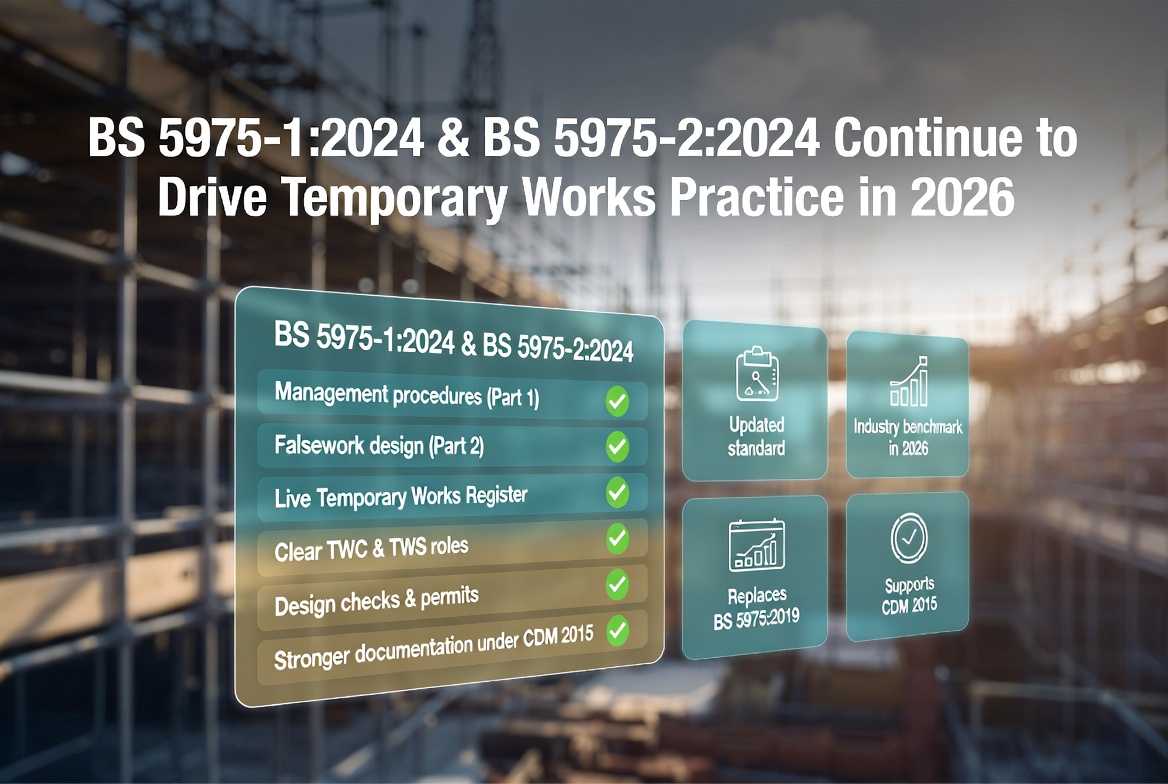
The British Standard for temporary works, reissued at the end of 2024 as two separate parts, continues to shape day-to-day practice on UK construction sites throughout 2026.BS 5975-1:2024 covers management procedures for the control of temporary works, while BS 5975-2:2024 addresses the design and implementation of falsework. Together they replace the previous BS 5975:2019 edition. Industry guidance published and updated across 2026 (including from construction trade publications, HSE-aligned sources and training providers) consistently highlights the same core requirements:
- A live Temporary Works Register that tracks every item from design brief through installation, loading, inspection and striking
- Clear appointment and separation of the Temporary Works Coordinator (TWC) and Temporary Works Supervisor (TWS) roles
- Appropriate design check categories, permits to load and permits to strike
- Stronger emphasis on documentation, traceability and competent people
Source note: Based on the current BS 5975-1:2024 and BS 5975-2:2024 standards (published December 2024) and ongoing industry guidance and commentary published throughout 2025–2026.Meta Description